In India’s rapidly accelerating digital lending landscape, borrower-submitted digital PDF bank statements serve as the primary source of financial truth for retail, MSME, and unsecured business loan underwriting. However, as digital origination channels expand across Non-Banking Financial Companies (NBFCs), private banks, and fintech platforms, document tampering has emerged as one of the most severe operational and credit risk vectors facing credit underwriters today.
With readily accessible PDF editing applications, online document manipulators, and automated scripts, fraudulent loan applicants and unscrupulous loan brokers can quickly alter account balances, insert fake revenue credits, or delete recurring EMI debits. Under pressure to meet fast Turnaround Time (TAT) targets, human credit managers auditing statements line-by-line visually cannot reliably spot sophisticated PDF modifications. To safeguard loan portfolios and strictly adhere to Reserve Bank of India (RBI) Master Directions on Fraud Management, financial institutions are deploying an advanced automated bank statement analyzer equipped with deep digital forensic tamper detection.
The Escalating Risk of PDF Bank Statement Forgery in Indian Lending
Bank statement forgery is no longer confined to crude paper splicing or low-resolution image doctoring. Today’s digital borrowers manipulate vector-based PDF files downloaded directly from NetBanking portals or mobile banking applications of top Indian commercial banks such as HDFC Bank, ICICI Bank, State Bank of India (SBI), Axis Bank, and Bank of Baroda.
Common Document Tampering Methods Used by Fraudulent Applicants
Credit risk audits across Indian lending institutions reveal four primary techniques utilized to fabricate or alter PDF bank statements:
- 1. Transaction Line Item Injection: Fraudulent applicants inject fake high-value credit entries (such as fictitious customer NEFT/RTGS transfers or bogus RTGS payments) to artificially inflate business turnover and pass minimum monthly revenue thresholds.
- 2. EMI Debit and Bounce Charge Deletion: Debtors hide ongoing liabilities by removing monthly EMI debit lines associated with existing NBFC loans or deleting NACH/ECS bounce charges to artificially depress their Fixed Obligation to Income Ratio (FOIR).
- 3. Balance Total Modification: Modifying the opening balance, daily closing balances, or Average Monthly Balance (AMB) totals without altering individual transaction rows, creating a mismatch between ledger math and printed figures.
- 4. Password Decryption and Re-saving: Using third-party decryption utilities to remove native PDF password protection (e.g., PAN + Date of Birth combinations or Account Number password schemas used by SBI and HDFC), editing the underlying text layers, and re-exporting the file with altered fonts.
The Operational Vulnerabilities of Manual Visual Verification
Relying on credit underwriters or junior operations staff to visually inspect bank statements is inherently vulnerable. When reviewing multi-page statements spanning 6 to 12 months with thousands of transactional rows, human fatigue leads to missed anomalies. Furthermore, modern PDF editors render text using matching system fonts, making pixel-level alterations virtually indistinguishable to the human eye. Without algorithmic inspection, tampered statements routinely bypass traditional underwriting checks, leading directly to non-performing asset (NPA) spikes downstream.
How Digital Forgery Operates in Indian Banking PDFs
Every PDF document generated by an Indian bank’s core banking system (CBS)—such as Infosys Finacle, TCS BaNCS, or Oracle FLEXCUBE—carries a distinct digital signature, stream layout, font matrix, and structural metadata tree. When a user opens a bank statement PDF in a third-party editor to tamper with numbers, these underlying structural attributes are irrevocably broken.
Font Embedding Anomalies and Text Bounding Box Discrepancies
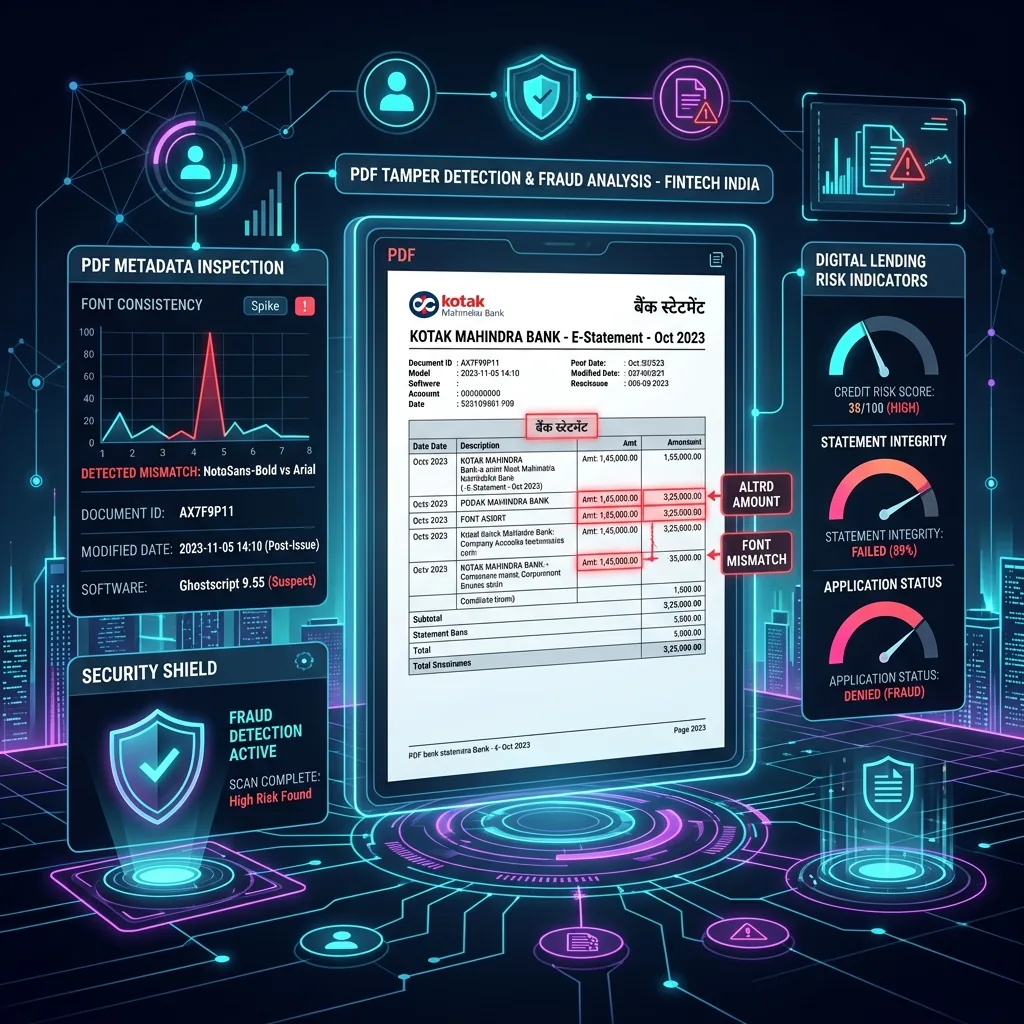
Indian commercial banks embed specific font subsets (such as Helvetica-Bold, Arial-MT, or custom bank typefaces) into their statement generation engines. When an applicant edits a PDF in desktop software, the editor frequently injects non-standard font subsets or alters key character metrics:
1. **Font Name & Encoding Shifts:** Replacing embedded subset fonts with local system fonts (e.g., changing custom HDFC font encodings to generic Helvetica).
2. **Bounding Box Alignment:** Modifying numbers alters character widths, causing modified text blocks to shift by fraction-of-a-point coordinates relative to original table grid boundaries.
3. **Horizontal Scaling and Baseline Offset:** Modifying numerical values often requires compressing character spacing to fit within existing column boundaries, creating measurable micro-distortions in font scaling.
Metadata Inconsistencies and Document Modification Traces
Genuine bank statements generated by automated reporting engines (such as JasperReports, Oracle BI Publisher, or iText) contain strict document header metadata. When a file is modified using commercial editing software:
- The `/Producer` or `/Creator` metadata field shifts from automated reporting tools to desktop applications (e.g., Canva, Adobe Acrobat Pro, Sejda, or Nitro PDF).
- The `/ModDate` (Modification Timestamp) is set to a time long after the initial `/CreationDate`, signaling post-download document manipulation.
- Object stream numbers and incremental updates reveal appended layers where modified text has been superimposed over erased original numbers.
Balance Arithmetic and Running Total Mismatches
Fraudulent applicants who alter credit entries or change closing balance numbers rarely possess accounting expertise. When an applicant inflates a credit row from ₹10,000 to ₹10,00,000, they frequently fail to update the subsequent 50 transaction rows where the running ledger balance is calculated. Automated parser engines perform multi-directional mathematical verification, instantly flagging arithmetic discrepancies between cumulative deposits, withdrawals, and reported closing balances.
Technical Architecture of Automated PDF Tamper Detection
Modern fintech platforms utilize multi-layered document verification pipelines to catch fraudulent files before underwriters begin credit evaluations.
Native Stream Parsing vs. Flattened Image OCR
Standard optical character recognition (OCR) engines flatten PDF documents into raster images and extract text visually. While image OCR works for scanned paper documents, it strips away crucial digital metadata required to detect PDF tampering.
In contrast, native vector stream parsing inspects the raw PDF object tree. It analyzes font dictionaries, stream object integrity, text matrix operators, and vector paths directly. This allows the system to detect subtle font overrides, hidden text layers, whiteout box overlays, and modified stream structures that raster OCR engines completely miss.
Password-Protected PDF Ingestion for Indian Private and PSU Banks
In India, almost all downloaded PDF statements are secured with standardized password patterns defined by individual banks:
- - State Bank of India (SBI): Combination of registered mobile number or password format (DOB + last digits of account number).
- - HDFC Bank: Customer ID or combination of applicant PAN and DOB.
- - ICICI Bank: Account number combined with applicant date of birth.
- - Axis Bank: Customer ID or uppercase PAN number.
Automated parser platforms integrate secure password decryption microservices that programmatically unlock bank statements during applicant ingestion, verify standard security handler signatures, and validate that the original PDF encryption layer has not been stripped or modified by unauthorized third-party unlockers.
Cross-Reconciliation with GSTR-3B and Debt Service Metrics
Document tamper detection extends beyond single-file inspection. For MSME and commercial loan applicants, automated statement analyzers cross-reconcile parsed bank credits with external financial data sources:
1. **GSTR-3B GST Reconciliation:** Verifying monthly bank statement sales credits against outward taxable supplies reported in GSTR-3B filings to detect turnover inflation or fictitious invoicing.
2. **Debt Service Coverage Ratio (DSCR) & FOIR Recalculation:** Automatically identifying unlisted loan debits and adjusting the applicant's Debt Service Coverage Ratio (DSCR) to ensure accurate debt capacity assessment.
How CredTrace Automates Document Fraud Detection for Underwriters
CredTrace provides Indian banks, NBFCs, and fintech lenders with an enterprise-grade AI bank statement analyser built specifically to eliminate document fraud and accelerate credit decisions.
Instant Flagging of Font and Structural Anomalies
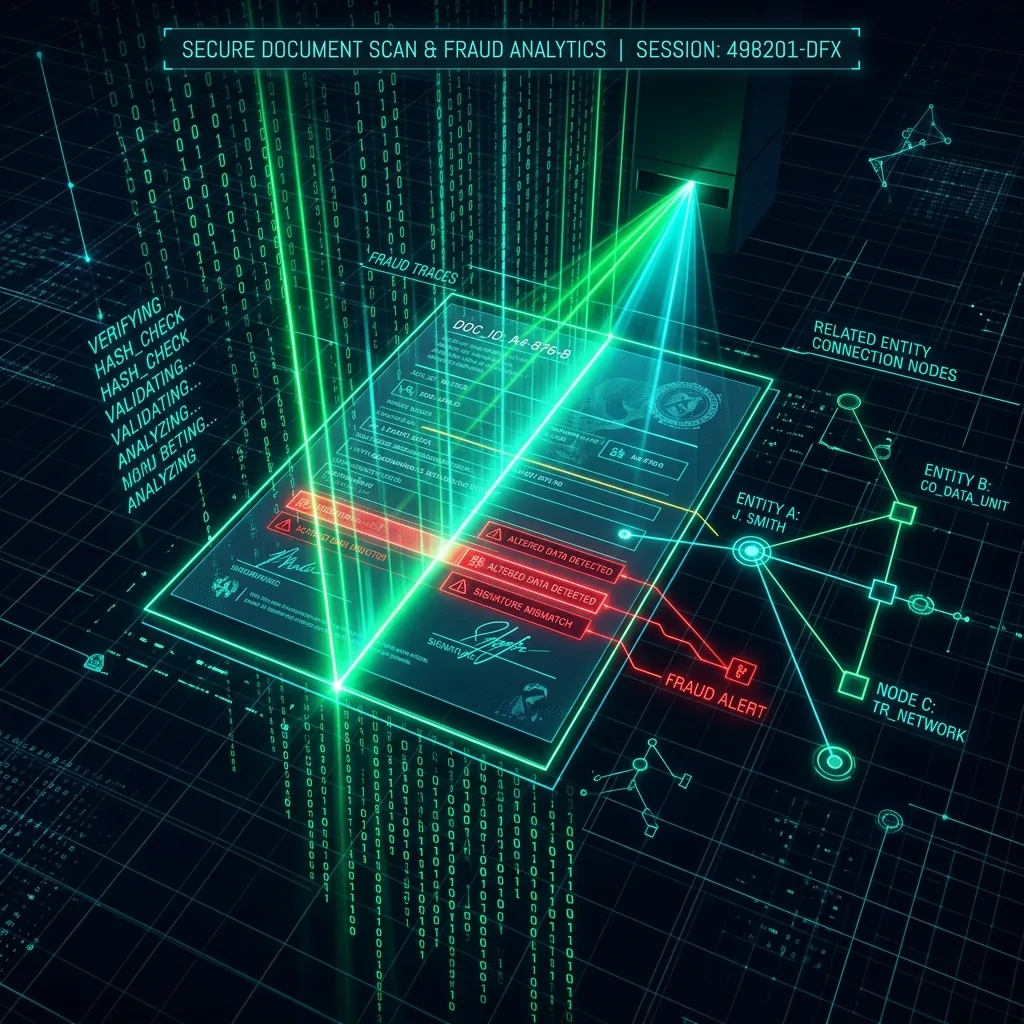
When a PDF bank statement is uploaded into CredTrace, the platform's forensic engine performs over 40 concurrent security checks in less than two seconds:
- **Metadata Auditing:** Scans creator tags, modification timestamps, and PDF stream layers for editing software signatures.
- **Font & Coordinate Integrity:** Maps font subset structures and detects bounding box displacement or character width scaling anomalies.
- **Transaction Checksum & Balance Verification:** Validates line-by-line ledger mathematics, flagging every financial red flags detected in bank statements automatically.
Seamless Integration into Credit Assessment Memos (CAM)
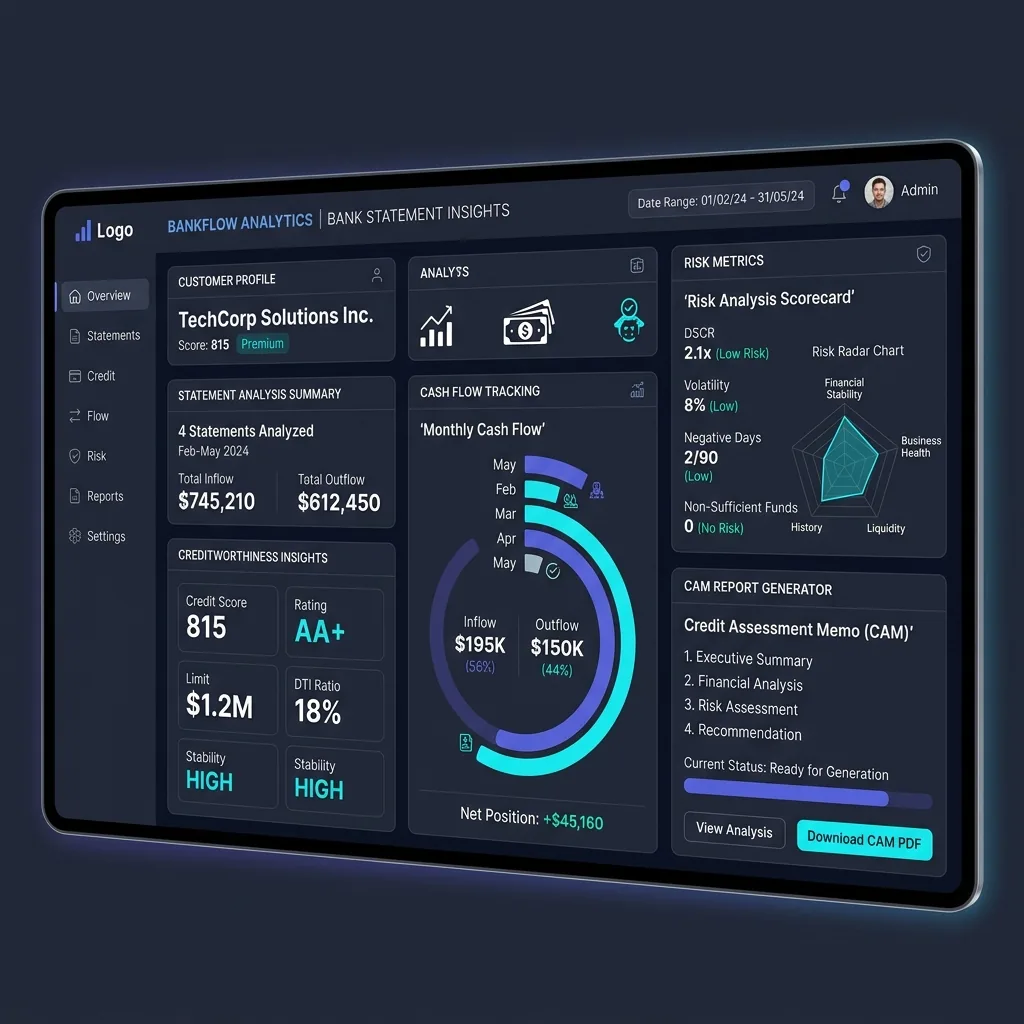
CredTrace bridges document verification and credit appraisal by automatically exporting verified data directly into standardized underwriting reports. Fraud scores, counterparty loop analysis, and tampered line flags are embedded directly into the final Credit Assessment Memo (CAM), giving credit committees complete transparency and verifiable risk proof before sanctioning loans.
Key Takeaways for Credit Risk Managers and Underwriters
- **Visual Inspection Is Obsolete:** Modern digital PDF editing tools enable flawless font matching that human underwriters cannot catch under tight TAT deadlines.
- **Inspect Structural Vector Metadata:** Detecting forgery requires analyzing font subset dictionaries, stream objects, coordinate bounding boxes, and PDF creation metadata rather than simple visual OCR.
- **Automate Fraud Audits at Scale:** Integrating automated bank statement analysis software like CredTrace protects financial institutions against early loan defaults, ensures strict RBI compliance, and reduces document verification TAT from hours to seconds.