In India’s vibrant economic landscape, Micro, Small, and Medium Enterprises (MSMEs) represent the backbone of industrial growth and employment. Yet, evaluating the creditworthiness of MSMEs has historically been one of the most complex challenges for commercial banks, Non-Banking Financial Companies (NBFCs), and digital lenders. Unlike large corporate entities with audited balance sheets, small businesses often operate with unstructured financial records, thin credit histories, and sparse bureau coverage.
To overcome this information asymmetry, modern risk management teams rely on two primary digital pillars: Goods and Services Tax (GST) returns and digital bank statements. While each document provides valuable insights independently, the true breakthrough in credit decisioning occurs when lenders perform automated GST and bank statement reconciliation. By cross-checking government-filed tax returns with actual banking cash flows, credit underwriters can validate revenues, discover hidden liabilities, and instantly identify sophisticated financial fraud.
The Importance of Reconciling GST with Bank Statements
GST filings and bank statements offer two different views of a business’s financial health. GST returns (such as GSTR-3B and GSTR-1) represent a business's self-declared transactions reported directly to the government. GSTR-3B provides a monthly summary of outward supplies (sales) and input tax credit (ITC) claimed, while GSTR-1 details invoice-level sales, mapping exactly who the business sold to. Conversely, bank statements show the transactional reality—the physical inflows and outflows of cash, average monthly balances (AMB), and operational expenditures.
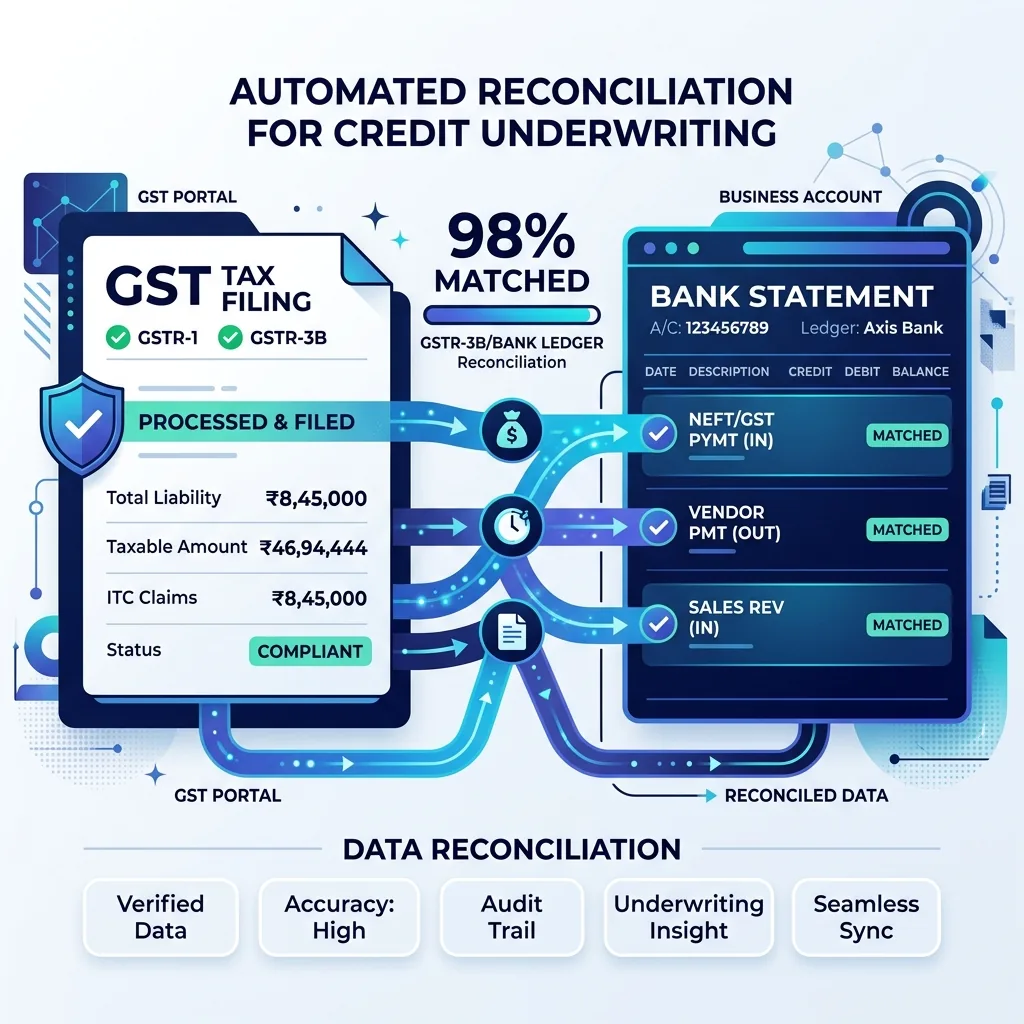
Underwriters must compare these data streams because a business can appear highly profitable on its tax filings while suffering from a severe cash flow crunch, or vice versa. For example, a business might declare high revenues on its GSTR-1 to maintain a premium profile but fail to realize those funds in its bank accounts due to bad debts or delayed payments. Reconciling these documents ensures that a borrower’s declared turnover is backed by actual banking credits. Performing this reconciliation is a key step when constructing an automated Credit Assessment Memo (CAM) report.
The Mechanics of Automated GST-to-Bank Reconciliation
Reconciling GST and bank statement records manually is an operational bottleneck. A standard business loan application requires auditing 12 months of bank statements across multiple bank accounts (like HDFC, ICICI, SBI, or Axis) alongside dozens of GST PDF files. Underwriters are forced to manually extract numbers, align dates, and build spreadsheets to match monthly credit entries with declared GST turnover.
An automated bank statement analyzer solves this by using advanced optical character recognition (OCR) and native data parsing to execute reconciliation in seconds:
- 1. Data Extraction & Classification: The system parses GSTR-3B, GSTR-1, and bank statement PDFs (handling common private and PSU bank passwords). It categorizes bank deposits, isolating business revenue credits from non-operational transactions (such as self-transfers, promoter equity infusions, or short-term loans).
- 2. Monthly Sales vs. Credits Alignment: The software maps GSTR-3B Section 3.1 (Outward Taxable Supplies) against monthly business credits in the bank statements, calculating the percentage variance.
- 3. Credit Realization Timeline Analysis: Because B2B businesses operate on credit terms (e.g., net-30 or net-90 days), sales reported in GSTR-1 for June may not reflect in bank statements until August. Automated parsers calculate these lag periods, determining the average collection period and cash conversion cycle.
- 4. Counterparty Verification: The system matches the GSTINs of buyers declared in GSTR-1 invoices with the names of entities depositing funds in the bank statements, validating that transactions are genuine and occurred with authentic clients.
Critical Financial Red Flags Reconciling Detects
Cross-referencing GST filings with cash flows exposes discrepancies that bank statements or tax returns alone cannot show. The four most common anomalies detected include:
1. Turnover Inflation & Fake Invoicing
To qualify for larger business loans, some applicants fabricate invoices and report inflated sales on GSTR-1. They generate fake e-way bills and file null or minimal GSTR-3B tax returns, hoping lenders only check the high sales volume in GSTR-1. By comparing these invoices with actual bank records, automated reconciliation engines flag if those invoices were ever paid. If a business claims ₹50 Lakhs in sales to specific buyers in GSTR-1 but the bank statement shows zero credits from those buyers, the lender is alerted to potential fraud.
2. Tax Evasion & Cash Transactions
Conversely, some small businesses under-report their sales in GST returns to minimize their tax liabilities while maintaining active cash flows in their bank accounts. If monthly banking credits are significantly higher than the sales declared in GSTR-3B, it signals tax non-compliance. Under RBI guidelines and strict credit risk policies, lending to tax-evading entities introduces major regulatory risks, as tax authorities can freeze bank accounts to recover dues, impacting the borrower's debt servicing ability.
3. Circular Trading & Round-Tripping of Funds
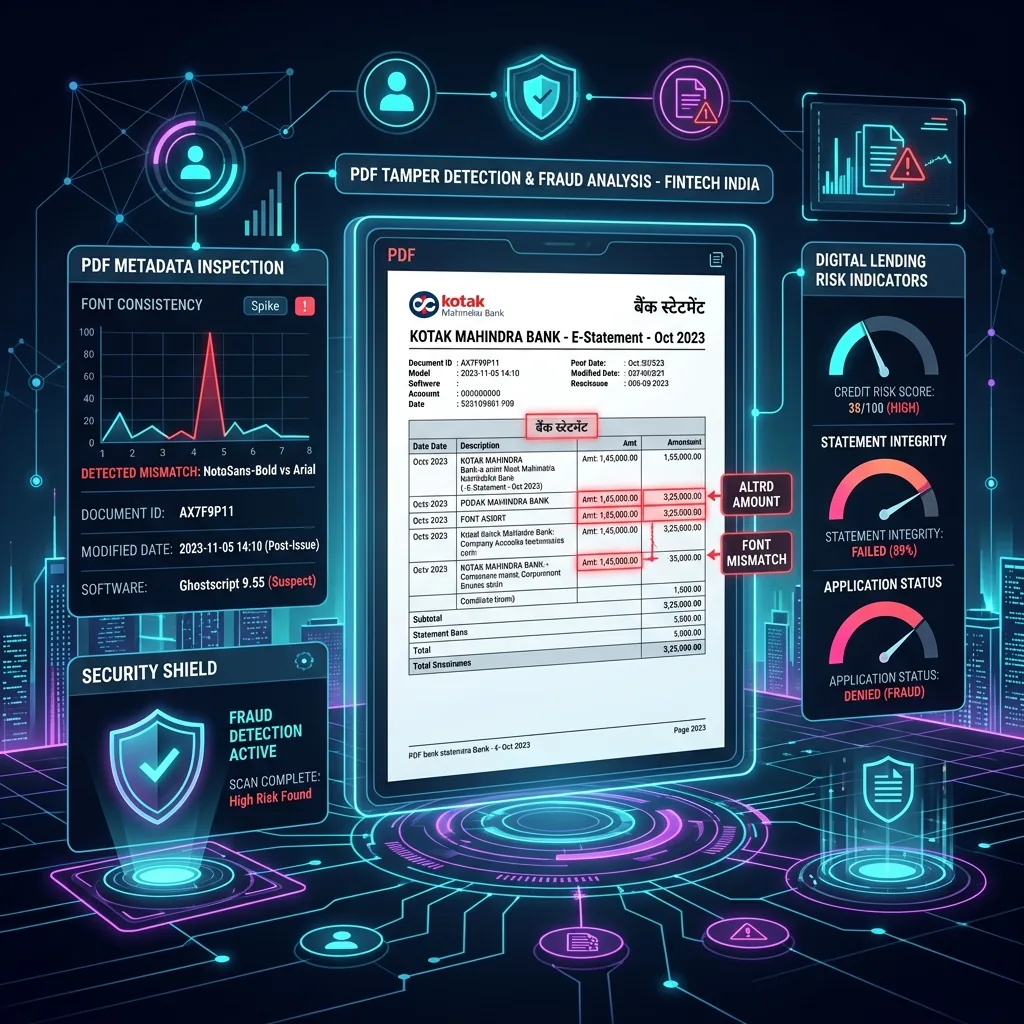
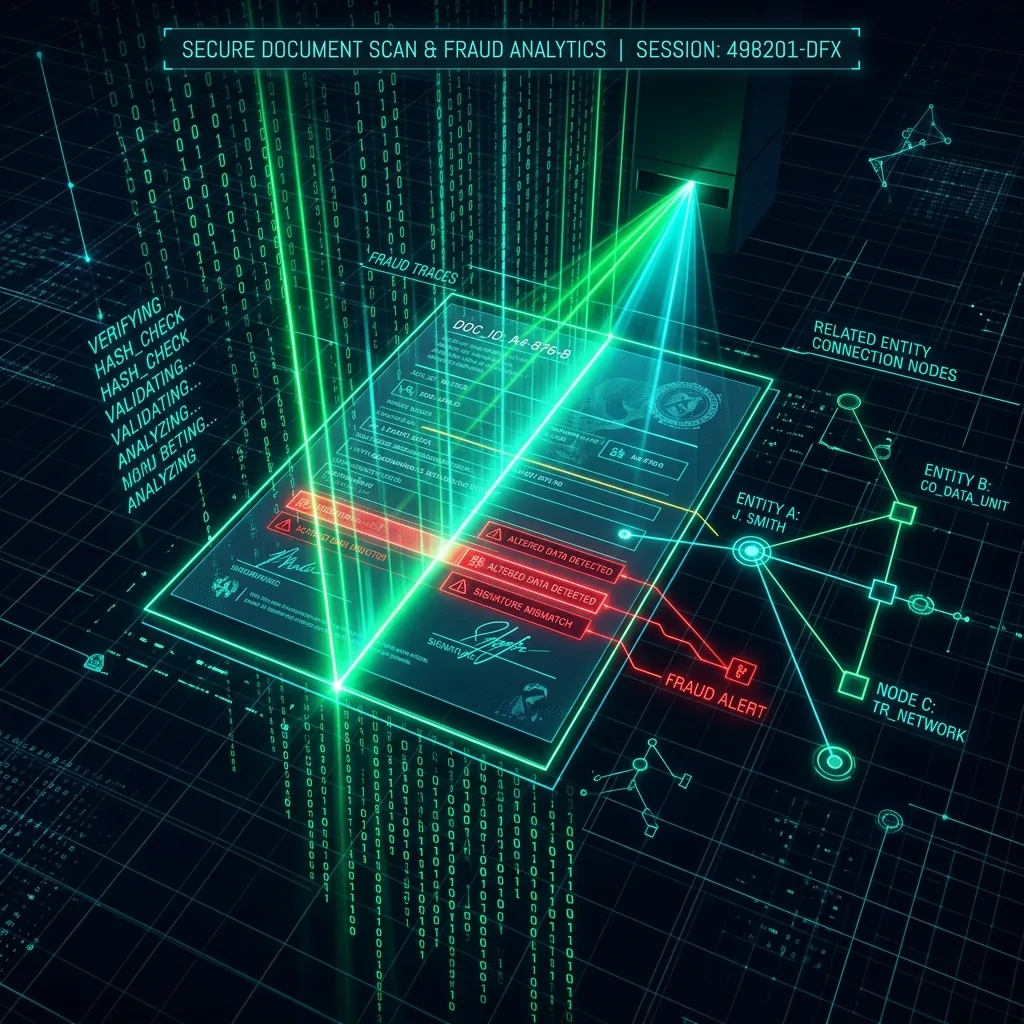
Circular trading is a practice where related entities trade invoices and pass funds in circles to inflate their balance sheets and banking volumes. Using automated PDF bank statement tamper detection and counterparty mapping, reconciliation engines detect if GST invoices and bank credits are moving between promoters' personal accounts, sister concerns, or shell companies with no real economic value.
4. Mismatches in Realized Value (Collection Risks)
Even without fraudulent intent, a wide variance between GST sales and bank credits highlights cash flow issues. If a business files steady GSTR-1 invoices month-on-month but bank credits are irregular and declining, the business’s receivables are likely stuck. This increases the borrower’s default risk, indicating that their operational liquidity is insufficient to service monthly EMIs.
Accelerating Underwriting & Lowering TAT
Reconciling GST and bank statement data manually increases Turnaround Time (TAT) and risks borrower drop-off. Modern credit underwriters use automated bank statement analysis software to streamline the lending pipeline:
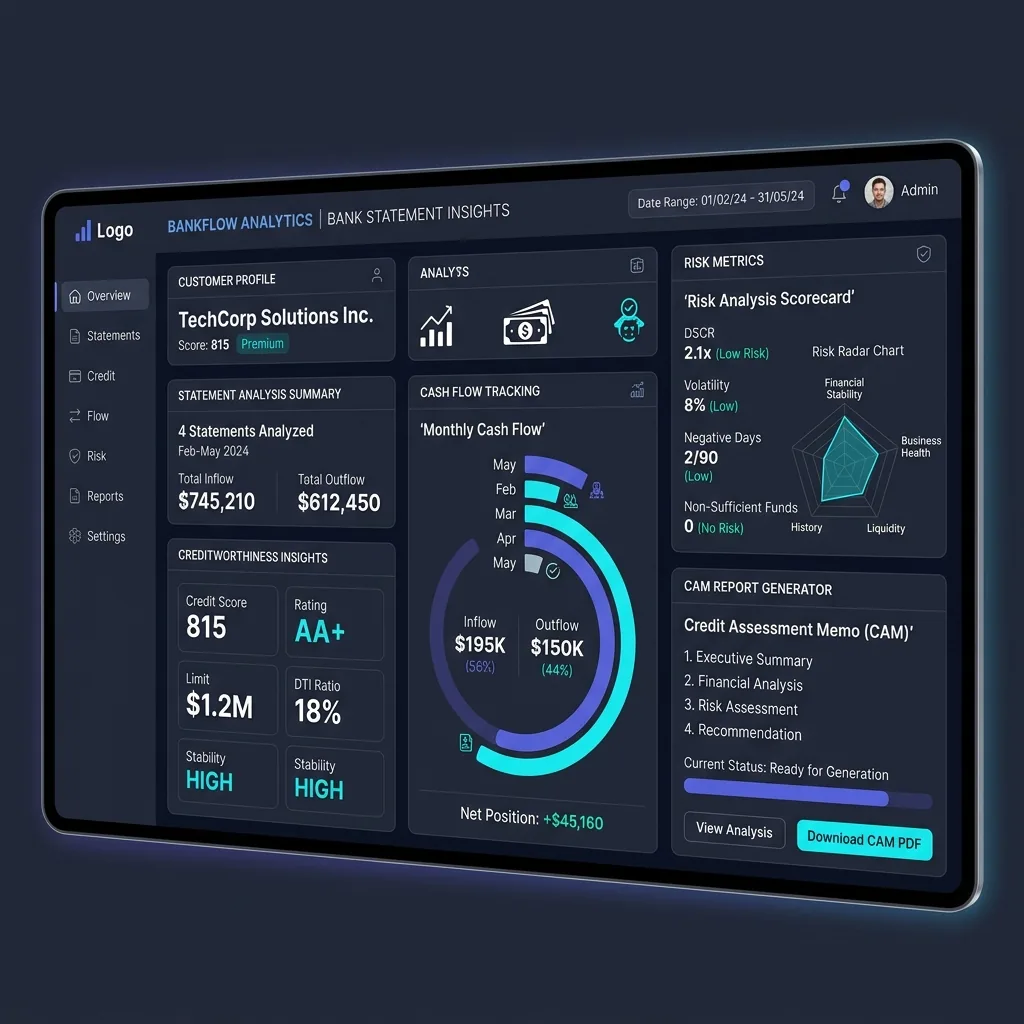
By automating this data flow, underwriters receive a single, verified report containing key metrics such as the Debt Service Coverage Ratio (DSCR), Average Monthly Balance (AMB), and Fixed Obligation to Income Ratio (FOIR). This enables credit committees to make loan decisions in minutes rather than days, reducing operational expenses and ensuring that loans are backed by verified cash flow data.
Conclusion
GST and bank statement reconciliation is an essential practice for modern MSME lenders in India. Combining tax compliance data with actual banking transactions provides a complete view of a borrower's creditworthiness. Integrating a dedicated **bank statement analyzer** like CredTrace allows banks and NBFCs to automate this reconciliation, detect transactional red flags instantly, reduce turnaround times, and build a high-performing loan book with minimal credit risk.